
Source 1: Reconstruction and Changes in Art, Literature, and Media
During Reconstruction, newspapers, art, and entertainment were key in shaping how Americans saw African Americans. Even as Black citizens gained new rights, much of the media worked against equality. Writers and artists mixed old stereotypes with new stories. They aimed to shape public opinion nationwide.
Before Reconstruction, white Americans shared racist ideas. They used books, drawings, and songs to spread these views. These ideas did not disappear after the Civil War. Instead, they continued during Reconstruction and reached wide audiences through magazines and illustrated newspapers. Many images portrayed Black people as lazy, foolish, or childlike, which suggested they were unfit for citizenship.
Illustrated newspapers such as Harper’s Weekly and Frank Leslie’s Illustrated Newspaper were especially influential. Their images were easy to understand, even for people who could not read well. Artists created “social types” that readers came to expect and recognize. Black Americans were often shown in exaggerated ways that made them appear inferior to white Americans.
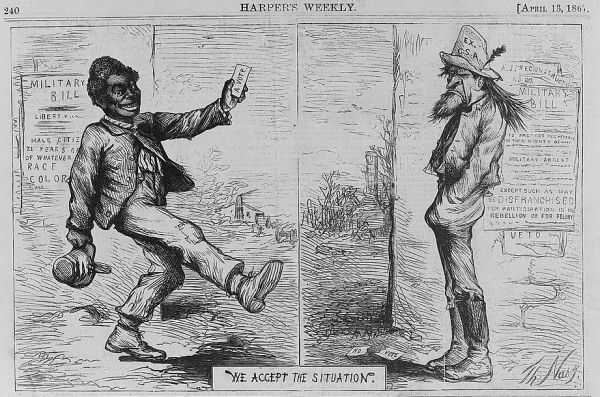
Political cartoons were one of the most powerful forms of media at this time. Thomas Nast was the most famous cartoonist of the Reconstruction era. His cartoons appeared in Harper’s Weekly and reached millions of readers. Nast supportedt back Black voting rights and condemned white supremacist violence. However, his work still used racial stereotypes familiar to audiences. These images helped shape how Americans imagined race and citizenship.
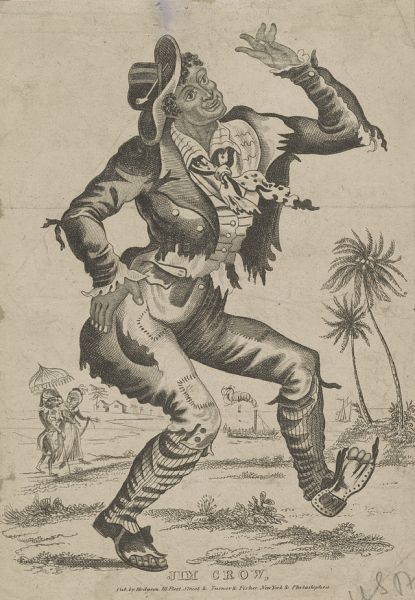
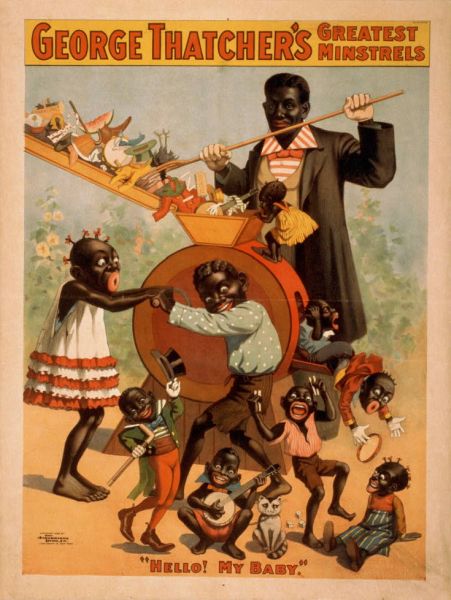
Minstrel shows were another popular form of entertainment during Reconstruction. Performers used blackface and exaggerated costumes to mock Black speech and behavior. These performances spread stereotypes nationwide. They pushed the notion that Black Americans were simple, careless, or not serious. The character called “Jim Crow” came from these shows and later became linked to segregation laws.
Literature also shaped public attitudes during the Reconstruction era. Many novels, poems, and short stories pushed the Lost Cause narrative. This idea painted the Old South as peaceful and honorable. It also called Reconstruction a mistake. Many of these stories said that enslaved people were happy on plantations. They claimed that enslaved people were loyal to their enslavers, who supposedly took care of them. Characters such as the loyal Mammy and the happy, obedient enslaved people often appeared in these writings. By presenting plantation life as kind and orderly, these stories encouraged readers to believe that Black freedom had ruined Southern society and that racial equality was unnatural.
Black Americans responded by creating their own newspapers. They also gave speeches and published writings. Black editors and writers challenged racist portrayals and demanded respect in the media. Frederick Douglass argued that false images harmed Black communities and shaped unfair laws and attitudes. Mary Ellen Pleasant and other key figures helped by backing Black newspapers. They used their influence to demand fair reporting and civil rights during Reconstruction.
Different types of media during Reconstruction shaped how Americans viewed race, power, and citizenship. These portrayals weakened support for equality, even as Reconstruction progressed, and left lasting impacts on the nation.
Source 2: We accept the situation by Thomas Nast (1867)
Context: This political cartoon was published in Harper’s Weekly in April 1867. The “Military Bill” shown in the image refers to the Reconstruction Acts of 1867.
Source 3: Frederick Douglass, Letter to Sylvester R. Koëhler, June 14, 1870
Context: This is an excerpt from a letter written by Frederick Douglass to Sylvester R. Koëhler, an art critic and editor, in 1870. Douglass wrote these words shortly after Hiram Revels became the first African American ever elected to the United States Senate and had a professional portrait made to commemorate the event.
Excerpt:
Upon public ground I thank the Publishing House of Prang and Co. for giving the country this admirable picture of our first colored American Senator. Whatever may be the prejudices of those who may look upon it, they will be compelled to admit that the Mississippi Senator is a man, and one who will easily pass for a man among men. We colored men so often see ourselves described and painted as monkeys that we think it a great piece of good fortune to find an exception to this general rule.
Heretofore colored Americans have thought little of adorning their parlors with pictures. They have had to do with the stern and I may say, the ugly realities of life. Pictures come not with slavery and oppression and destitution—but with liberty, fairplay, leisure and refinements. These conditions are now possible to the Colored American Citizens—and I think the walls of their houses will soon begin to bear evidences of their altered relations to the people about them.
This portrait, representing truly, as it does, the face and form of our first colored Senator to the U. States Senate—is a historical picture. It marks, with almost startling emphases the point dividing our new from our old condition. Every colored householder in the land should have one of these portraits in his parlor—and should explain it to his children—as the dividing line between the darkness and despair that overhung our past, and the light and hope that now beam upon our future as a people. I shall be glad to have you make use of this note in commending the portrait of Hon: Hiram R. Revels to the colored people, and all other people of the United States.
Yours Respectfully.
FREDERICK DOUGLASS