
Source 1: The Twenty-Sixth Amendment
Section 1.
The right of citizens of the United States, who are eighteen years of age or older, to vote shall not be denied or abridged by the United States or by any State on account of age.
Section 2.
The Congress shall have power to enforce this article by appropriate legislation.
Source 2: The Twenty-Sixth Amendment: Debate, Passage, and Legacy
For much of American history, citizens had to be at least 21 years old to vote. This standard traced back to colonial traditions that tied voting privileges to property ownership and assumptions about maturity and independence. The question of whether younger Americans deserved the franchise received little serious attention until World War II, when Congress lowered the minimum draft age to 18. The disconnect between military service and political participation gave rise to the slogan "old enough to fight, old enough to vote," which would drive the movement to lower the voting age for the next three decades.
Despite broad public sympathy, early efforts to lower the voting age failed repeatedly. West Virginia congressman Jennings Randolph introduced his first constitutional amendment on the subject in 1942. President Eisenhower endorsed the idea in his 1954 State of the Union address, but Congress did not act. As the Vietnam War intensified, so did public pressure. The average age of a Vietnam draftee was 19, and protests on college campuses amplified demands that young Americans be allowed to participate in the democratic process that sent them to war.
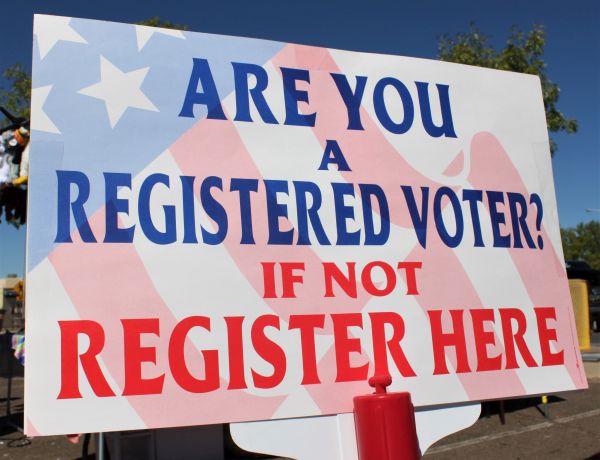
Congress attempted a legislative solution in 1970 by including a provision in the Voting Rights Act that lowered the voting age to 18 for all elections. The Supreme Court, however, ruled in Oregon v. Mitchell that Congress had the authority to lower the voting age only for federal elections, not state and local ones. Faced with the costly prospect of maintaining two separate voter registration systems, states supported a constitutional solution. On March 23, 1971, Congress approved the proposed Twenty-Sixth Amendment, and it was ratified by three-fourths of the states by July 1, 1971, the shortest ratification period of any constitutional amendment in American history.
The amendment's legacy is complicated. Approximately 11 million new voters were added to the electorate, but turnout among young voters has historically been low. In the 1972 presidential election, the first in which 18-year-olds could vote, overall youth turnout reached only 55 percent and has declined further in many subsequent elections. Debates about young people's civic engagement continue today, alongside ongoing litigation over whether states may impose restrictions that disproportionately burden voters between the ages of 18 and 20.
Source 3: Excerpt from the Congressional Record: Speech of Representative William Keating of Ohio on the 26th Amendment, March 23, 1971.
“... This is one of the major steps that could mean 11 million young Americans will be able to have a voice in the presidential, congressional, and State and local elections a year from next November.
…
The latest figures show there are 11.5 million persons between the age of 18 and 24; 4.1 million are in the labor force; 800,000 are in the Armed Forces; 4.9 million are in high school and college; 1 million are housewives; 80 percent of the total are high school graduates; 46 percent are college students. These younger voters should be given the right to full participation in our political system because they will contribute a great deal of knowledge to our society.
It is a simple fact that our young citizens of today are mentally and emotionally capable of full participation in our democratic form of government.
Under the criminal laws of more than 49 States, 18-year-olds are treated as adults. They are also subject to military induction. I might add insurance companies and the Federal Civil Service also treat them as adults.
I welcome this new potential group of voters. They must have a voice as to who is to be elected as their city councilmen, city judge, State representatives, county commissioner, Congressman, Senator, and Governor and most importantly the President and Vice President.”
Source 4: Excerpt from the Congressional Record: Speech of Representative John Schmitz of California Against the 26th Amendment, March 23, 1971.
“... One of the arguments many have given for lowering the voting age is that young people are in school longer nowadays. But as a former college instructor, I would like to say that maturity, which ought to be one of the reasons for giving the right to vote, is not attained by those who have never left the ivory tower. Maturity comes from getting out in the world and cutting one's own path.
I see no reason for lowering the voting age. There is a legend that Harry Truman used to say, when he was asked if he was in favor of lowering the voting age to 18, 'Heck no' -- or as close to 'heck' as Harry Truman got -- 'It ought to be raised to 24.' Now, I am a moderate on this position, and I am neither in favor of lowering the voting age to 18 nor raising it to 24. I think we ought to keep it at 21.
I believe we ought to vote down this resolution. We can do it. I hope next year or the year after, when the States do turn down this constitutional amendment -- if it is passed, and I hope it is not -- that we will come back and give some consideration at that time to the question of whether the people want to lower the voting age to 18. It is not inconceivable or impossible -- in fact, it is the will of the people that we not do so. If we fail as legislators to consider the will of the people, we are acting in an absolutely unreasonable and unrealistic manner. I maintain then we are in pretty bad shape.”
.
